Articles
Meet the cars that "see in the dark"
Advertisement

Driving in low-light conditions poses a significant risk of accidents due to the biological limitations of the human eye, which sees poorly in such environments. However, there are devices designed to minimize the effects of low light, such as headlights that, through artificial illumination, make the road and objects more visible. There are also more technologically advanced solutions that, while not replacing regular lighting, further enhance the driver's field of vision. These include infrared and thermal sensor cameras, which enable night vision.
How they work
There are two types of technology used in these systems: infrared and thermal cameras, which help detect objects, people, and animals up to 160 meters away.
Infrared cameras use a camera with standard sensors, similar to those used in everyday life. However, the filter that blocks naturally emitted infrared light is removed, and infrared illuminators (like those seen around the lens on home security cameras) are added to increase the camera's ability to detect objects.
Thermal cameras use sensors that detect thermal radiation, such as radio waves, X-rays, infrared light, and others.

You will be redirected to another website
History
In 2000, Cadillac was the first automaker to use a night vision system in a mass-produced vehicle. The Cadillac Deville used a thermal camera positioned in the front grille and projected images onto the car's windshield, a major innovation for the time.

Toyota was the first automaker to apply infrared technology to a mass-produced vehicle in 2002 with the Toyota Landcruiser Cygnus and Lexus LX470 (the brand's luxury division).
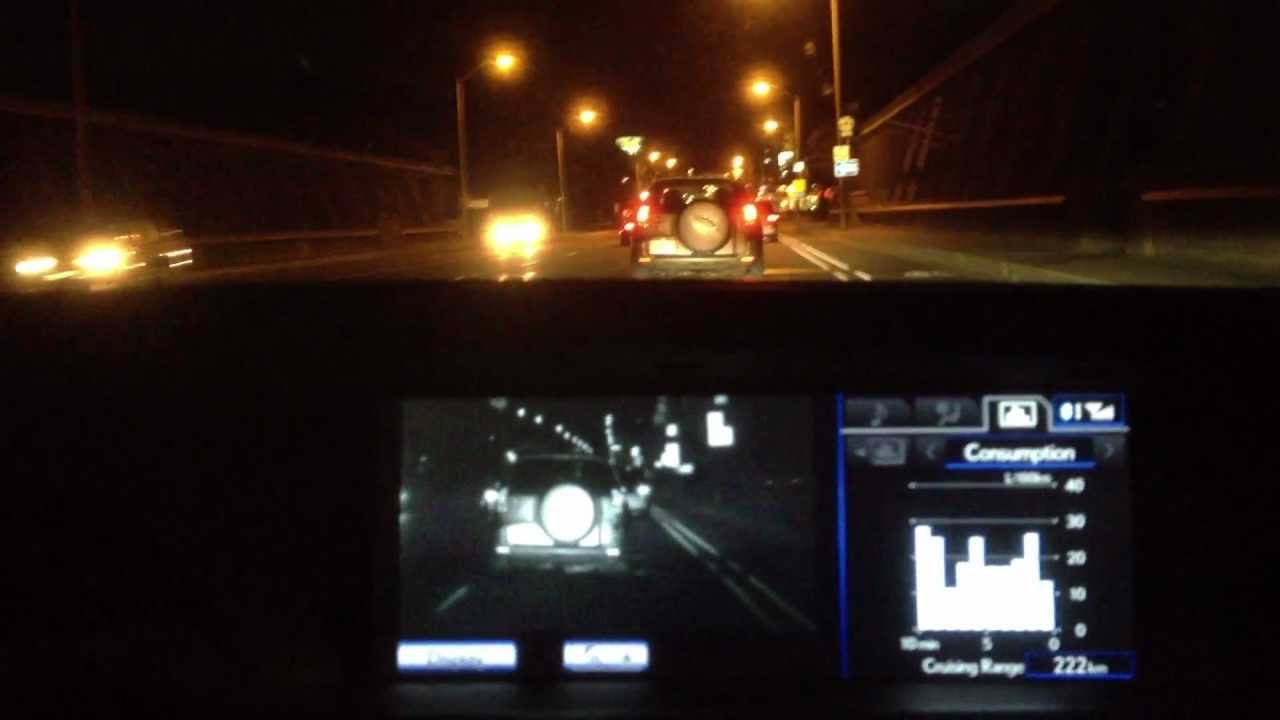
Later, other automakers developed and incorporated the technology. Today it is offered in the most luxurious models of brands such as Mercedes-Benz, BMW, Cadillac, Lexus, Toyota, Honda, Audi, among others.
This video shows the system in operation:
The technology is currently only found in luxury vehicles and is rare in the country, but over time, like other cutting-edge systems in the automotive industry, the product should become more popular and be offered in cheaper cars.
But for those who are clamoring for such a system, it is possible to buy and install it independently in the car, just as is done with reversing cameras and sensors. It is also worth noting that this is an auxiliary system and should never be used as the primary road display device, especially in vehicles that project the image onto the dashboard.
Trending Topics

Iconic cars of Brazil: Discover the models that left their mark!
Many models have made history among Brazilians, but some are considered true icons. Find out which cars are iconic in Brazil.
Keep Reading
Car auctions: Learn the key to a successful purchase.
Mr. Cars | The best articles about cars on the internet! Car auction: Learn the paths to a successful purchase.
Keep Reading
Embracon Motorcycle Consortium: Learn about it and how it works!
Want to know how the Embracon Motorcycle Consortium works? It's interest-free, requires no down payment, and offers various payment options!
Keep ReadingYou may also like

Rentcars: How to register and rent?
Are you going to rent a car but don't know where to start? Don't worry, check out Rentcars and learn how to rent a vehicle without any hassle!
Keep Reading
TOP Car Auctions: How to register to buy?
Want to know how to snag a good, inexpensive car at auction? At TOP Car Auctions, you have that opportunity, so find out how to buy here!
Keep Reading
Learn how to protect your car with Azul auto insurance.
Mr. Cars | The best articles about cars on the internet! Learn how to protect your car with Azul auto insurance.
Keep Reading


